Quick Answer
The U.S. average residential electricity rate is 17.91 cents per kWh in 2026 (EIA Electric Power Monthly). State rates range from about 11 cents/kWh in North Dakota and Utah to roughly 41 cents/kWh in Hawaii. In deregulated states, shopping a competitive supplier saves 10-20% on the supply portion.
| Tier | Rate per kWh | Examples |
|---|---|---|
| U.S. average | 17.91¢ | National residential average |
| Cheapest | ~11-12¢ | North Dakota, Utah, Washington, Wyoming |
| Most expensive | 28¢ to 41¢ | Hawaii, California, Massachusetts, Connecticut, Rhode Island |
Table of contents
Live Texas Rates · September 2026
Top 3 flat-rate plans run 13.3¢–13.6¢/kWh.
⚠ Lowest advertised: 6.6¢/kWhBill-credit plans — only cheap near 1,000 kWh usage. Above or below that, you pay much more.
Rates shown are all-in: energy and TDU delivery charges included. Live data from ComparePower API at Oncor (Dallas), 1,000 kWh reference usage.
Shopping for power in Ohio? See live rates from every supplier on our Ohio electricity rates page.
What Is the Average Electricity Rate Per kWh?
The national average electricity rate stands at 17.91 cents per kilowatt-hour in 2026, according to the U.S. Energy Information Administration.[1] That's the residential average. Commercial and industrial customers pay less because they buy in bulk.
But "average" is misleading. Nobody actually pays the national average. Your rate depends on where you live, which utility serves your address, and whether you've shopped for a competitive plan. A homeowner in Houston might pay 12¢/kWh on a fixed plan while someone in Boston pays 30¢ on their utility's default rate.
Think of 17.91¢ as a benchmark. If you're paying more, there may be room to save. If you're paying less, you're doing something right.
Electricity Rates for All 50 States Plus D.C.
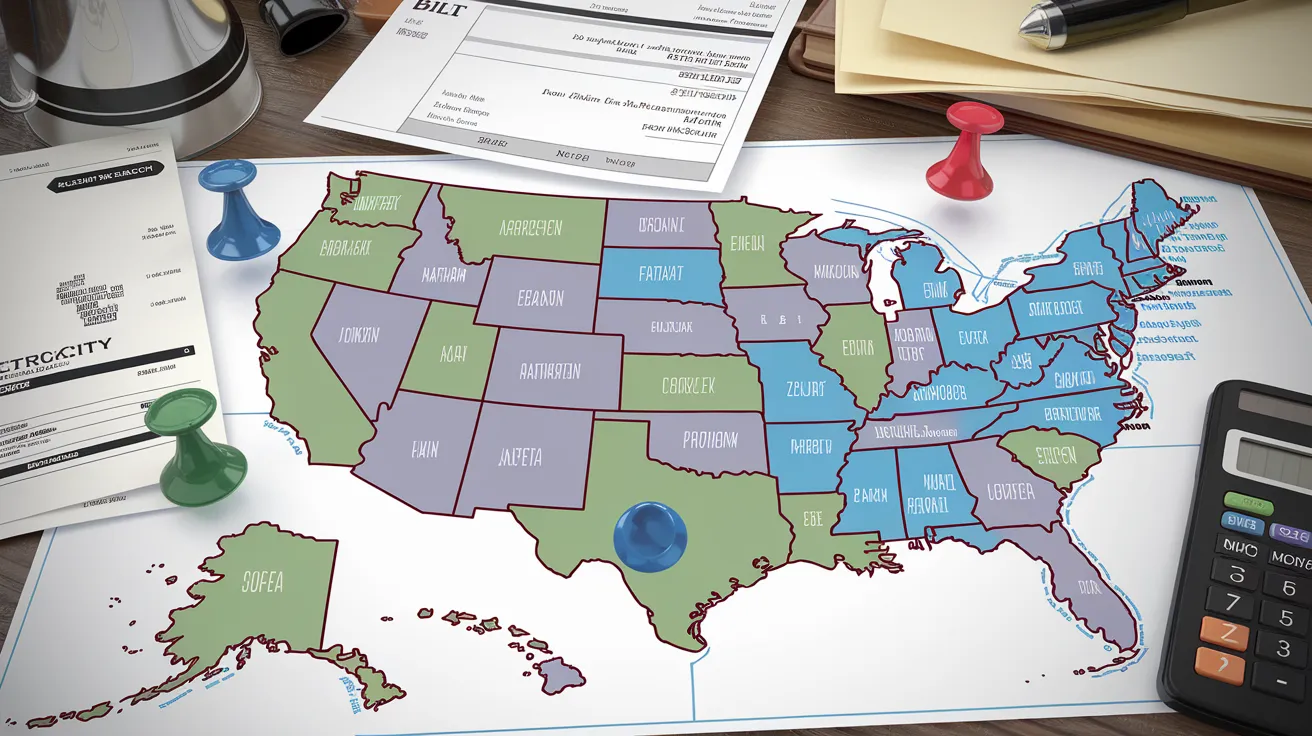
Here is every state ranked from cheapest to most expensive, using residential averages as of mid-2026 from EIA Electric Power Monthly Table 5.6.B.[1] Figures are rounded to the nearest 0.1 cent and shift month to month, so treat them as a ranking, not a quote. States marked deregulated let you shop your supply rate; linked states have shopping guides on this site.
| Rank | State | Avg. rate (¢/kWh) | Market |
|---|---|---|---|
| 1 | North Dakota | 11.4¢ | Regulated |
| 2 | Utah | 11.6¢ | Regulated |
| 3 | Washington | 11.8¢ | Regulated |
| 4 | Wyoming | 11.8¢ | Regulated |
| 5 | Idaho | 11.9¢ | Regulated |
| 6 | Nebraska | 11.9¢ | Regulated |
| 7 | Louisiana | 12.1¢ | Regulated |
| 8 | Missouri | 12.6¢ | Regulated |
| 9 | Arkansas | 12.7¢ | Regulated |
| 10 | Oklahoma | 12.8¢ | Regulated |
| 11 | Montana | 13.0¢ | Regulated |
| 12 | Tennessee | 13.1¢ | Regulated |
| 13 | South Dakota | 13.2¢ | Regulated |
| 14 | Kentucky | 13.4¢ | Regulated |
| 15 | North Carolina | 13.5¢ | Regulated |
| 16 | Mississippi | 13.9¢ | Regulated |
| 17 | Kansas | 14.1¢ | Regulated |
| 18 | Iowa | 14.2¢ | Regulated |
| 19 | Georgia | 14.4¢ | Regulated |
| 20 | Nevada | 14.5¢ | Regulated |
| 21 | West Virginia | 14.5¢ | Regulated |
| 22 | Florida | 14.8¢ | Regulated |
| 23 | South Carolina | 14.9¢ | Regulated |
| 24 | New Mexico | 15.0¢ | Regulated |
| 25 | Virginia | 15.0¢ | Regulated |
| 26 | Colorado | 15.1¢ | Regulated |
| 27 | Arizona | 15.4¢ | Regulated |
| 28 | Indiana | 15.4¢ | Regulated |
| 29 | Minnesota | 15.4¢ | Regulated |
| 30 | Texas | 15.5¢ | Deregulated |
| 31 | Oregon | 15.9¢ | Regulated |
| 32 | Alabama | 16.0¢ | Regulated |
| 33 | Delaware | 16.5¢ | Deregulated |
| 34 | Illinois | 16.5¢ | Deregulated |
| 35 | Ohio | 16.9¢ | Deregulated |
| 36 | Wisconsin | 17.5¢ | Regulated |
| 37 | Washington, D.C. | 18.5¢ | Deregulated |
| 38 | Pennsylvania | 18.8¢ | Deregulated |
| 39 | Maryland | 19.1¢ | Deregulated |
| 40 | Michigan | 19.4¢ | Deregulated (capped) |
| 41 | New Jersey | 21.0¢ | Deregulated |
| 42 | Vermont | 21.9¢ | Regulated |
| 43 | New Hampshire | 23.3¢ | Deregulated |
| 44 | Alaska | 24.9¢ | Regulated |
| 45 | New York | 25.3¢ | Deregulated |
| 46 | Maine | 26.1¢ | Deregulated |
| 47 | Rhode Island | 28.4¢ | Deregulated |
| 48 | Connecticut | 30.2¢ | Deregulated |
| 49 | Massachusetts | 30.9¢ | Deregulated |
| 50 | California | 31.5¢ | Regulated |
| 51 | Hawaii | 41.0¢ | Regulated |
The spread is enormous: a Hawaii household pays more than three and a half times the North Dakota rate for the same kilowatt-hour. And in the deregulated states, the average above blends default utility rates with shopped rates, so the plan you can actually sign up for often beats the number in this table.
States With the Cheapest Electricity Rates
Several states consistently rank at or below 12¢/kWh for residential electricity. North Dakota, Utah, Washington, and Wyoming lead the pack, all hovering around 11-12¢ per kWh.[2]
The pattern is clear: states with abundant hydroelectric power or natural gas production tend to have cheaper electricity. Washington state gets nearly 70% of its power from hydroelectric dams, so fuel cost is essentially zero. Wyoming and North Dakota benefit from coal and wind resources close to home.
Texas averages around 15-16¢/kWh statewide, but deregulated areas offer fixed plans well below that if you shop. The catch: variable rates in Texas can spike during extreme weather, so the "average" masks real volatility.
States With the Highest Electricity Rates
Hawaii tops every list at roughly 41¢ per kWh. The reason is simple: nearly everything is imported by ship. Oil, natural gas, even coal, all shipped across the Pacific. That logistics cost lands directly on your bill.
California, Massachusetts, Connecticut, and Rhode Island round out the top five, all exceeding 28¢/kWh.[2] New England states face a combination of limited pipeline capacity for natural gas, high demand, and aggressive renewable mandates that add costs during the transition.
Massachusetts residents average around 31¢/kWh, but competitive suppliers in deregulated areas often price the supply portion well below the utility's default rate. That gap between default and shopped rates represents real money left on the table.
What Determines Your Electricity Rate?
Five factors drive your rate per kWh, and most people only think about one or two.
Fuel mix matters most. Utilities burning natural gas pass volatile fuel costs to you. Hydro and nuclear have near-zero fuel costs, keeping rates stable.
Infrastructure age is the silent driver. Older grids need expensive upgrades. Those capital costs get baked into delivery charges that can exceed supply costs.
Regulation structure determines whether you can shop. In deregulated states like Texas, Ohio, and Pennsylvania, competition pushes supply rates down. In regulated states, the utility sets the price.
Demand patterns and weather create seasonal swings. Summer AC loads in Arizona or winter heating in Maine both spike wholesale prices, and your bill follows.
Regulated vs. Deregulated State Rates
About 18 states plus Washington D.C. have some form of electricity deregulation, and this directly impacts what you pay per kWh.
In regulated states, your utility generates, transmits, and delivers your power. The state's public utility commission sets rates through a formal review process. You have one option: take it or leave it.
In deregulated states like Ohio, Pennsylvania, Massachusetts, and Texas, the supply portion of your bill is open to competition. Multiple suppliers compete for your business, which typically drives the supply rate 10-20% below the utility's default offer.
The delivery charge stays the same regardless. But since supply makes up 40-60% of your total bill, shopping in a deregulated state can save $200-500 per year on a typical household bill.
Rate Per kWh vs. Your Actual Bill
A low rate per kWh doesn't guarantee a low bill. Two households paying the same 12¢/kWh can have wildly different monthly totals.
The math is straightforward: monthly cost = rate × usage. A 1,500-square-foot home using 900 kWh/month at 12¢ pays $108. A 3,000-square-foot home using 2,000 kWh at the same rate pays $240.
Watch for hidden charges that inflate your effective rate. Monthly service fees ($5-15), demand charges, fuel adjustment riders, and renewable energy surcharges all add up. Divide your total bill by total kWh consumed to find your all-in rate. That's the number that actually matters for comparison.
When shopping plans, always calculate the all-in cost at your typical usage level, not just the advertised rate.
How to Get a Lower Rate Per kWh
Start with the biggest lever: shop your supply rate if you live in a deregulated state. Texas, Ohio, Pennsylvania, and Massachusetts all allow residential switching. Tools like ElectricRates.org pull current rates so you can compare in minutes.
Lock in fixed rates when prices are low. Winter months often bring cheaper plans because demand drops. A 12-month fixed rate protects you from summer spikes.
Reduce usage to compound savings. LED bulbs, smart thermostats, and sealing air leaks cut consumption 10-25% without sacrificing comfort. At the 17.91¢ national average, cutting 200 kWh/month saves about $430/year.
Finally, check if your utility offers time-of-use rates. Running your dishwasher and laundry after 9pm could shave 2-4¢/kWh off those loads.
Frequently Asked Questions
What is the average electricity rate per kWh in the US?
Why is my electricity rate higher than the national average?
Do electricity rates go up every year?
What is the cheapest state for electricity?
How do I find my current electricity rate?
Looking for more? Explore all our Understanding Deregulation guides for more helpful resources.
About the author

Consumer Advocate
Enri knows the regulations, the fine print, and the tricks some suppliers use. He's spent years learning how to spot hidden fees, misleading teaser rates, and contracts that sound good but cost more. His goal: help people avoid the traps and find plans that save money.
Compare rates in your area

Is your bill an F?
Grade your electric bill A–F against live plans in your ZIP. 30 seconds, no signup.
Topics covered
Sources & References
- Electric Power Monthly - Table 5.6.B (U.S. Energy Information Administration): "The average US residential electricity rate is 17.91 cents per kWh as of mid-2026"Accessed Aug 2026
- State Electricity Profiles (U.S. Energy Information Administration): "State-level residential electricity prices vary from approximately 11¢/kWh to roughly 41¢/kWh"Accessed Mar 2026
- Status of Electricity Restructuring by State (U.S. Energy Information Administration): "Approximately 18 states and Washington D.C. have restructured electricity markets allowing retail competition"Accessed Mar 2026
- Annual Energy Outlook (U.S. Energy Information Administration): "Residential electricity prices have increased an average of 2-3% annually over the past decade"Accessed Mar 2026
Last updated: August 5, 2026