Quick Answer
Power factor measures electrical efficiency (0-1.0 scale). Utilities penalize power factor below 0.85-0.90. Common causes: motors, VFDs, fluorescent lighting. Penalties add 5-15% to commercial bills. Capacitor banks correct power factor for $50-150/kVAR. Typical payback: 12-24 months. Check your power factor on ElectricRates.org.
What Is Power Factor?
There's a line item on your commercial electric bill that might as well be written in Latin. It says something about "power factor" or "reactive demand," and it's quietly adding 5-15% to what you owe.
Here's the simple version: power factor measures how much of the electricity your utility delivers actually does useful work. A score of 1.0 means perfect efficiency. Most businesses with motors, compressors, or older lighting run somewhere between 0.70 and 0.85—which means the utility is delivering power you can't use, and they want to get paid for it anyway.
Think of it like ordering a beer that's half foam. You're paying for a full glass, but you're only drinking half of it. That's what low power factor does to your bill.
Why Utilities Penalize Low Power Factor
From the utility's perspective, low power factor wastes infrastructure capacity. They must size transformers, cables, and substations for apparent power (kVA), not just real power (kW).
The infrastructure cost: A facility drawing 100 kW at 0.70 power factor requires 143 kVA of infrastructure capacity. That same facility at 0.95 power factor needs only 105 kVA. The utility built and maintains that extra capacity—and they want compensation for it.
Penalty thresholds: Most utilities start penalizing power factor below 0.85-0.90. AEP Ohio applies penalties below 0.85. PECO penalizes below 0.90. The penalty typically appears as a multiplier on demand charges or a separate line item.
Penalty magnitude: Expect 5-15% added to your bill for poor power factor. On a $5,000 monthly bill, that's $250-750 in avoidable costs.
What Causes Low Power Factor
Certain equipment types consistently drag down power factor. Knowing what causes the problem helps you target solutions.
Induction motors: The primary culprit in most facilities. Motors draw reactive power to create magnetic fields for operation. Lightly loaded motors have particularly poor power factor—a motor running at 25% load might have 0.55 power factor versus 0.85 at full load.
Variable frequency drives (VFDs): While VFDs save energy by controlling motor speed, they introduce harmonics that worsen power factor. Older VFD designs are worse offenders than modern units.
Fluorescent and HID lighting: Magnetic ballasts in older lighting systems have power factor around 0.50. Electronic ballasts improve this significantly.
Welding equipment: Arc welders create highly inductive loads with power factor often below 0.60.
Transformers: Lightly loaded transformers contribute reactive power demand even when equipment is off.
How to Check Your Power Factor
Your utility bill often shows power factor, though finding it requires knowing where to look.
On your utility bill: Look for "Power Factor," "PF," or "Reactive Demand (kVAR)." Some utilities show power factor directly as a decimal (0.82). Others show kW and kVAR, from which you can calculate power factor using: PF = kW ÷ √(kW² + kVAR²).
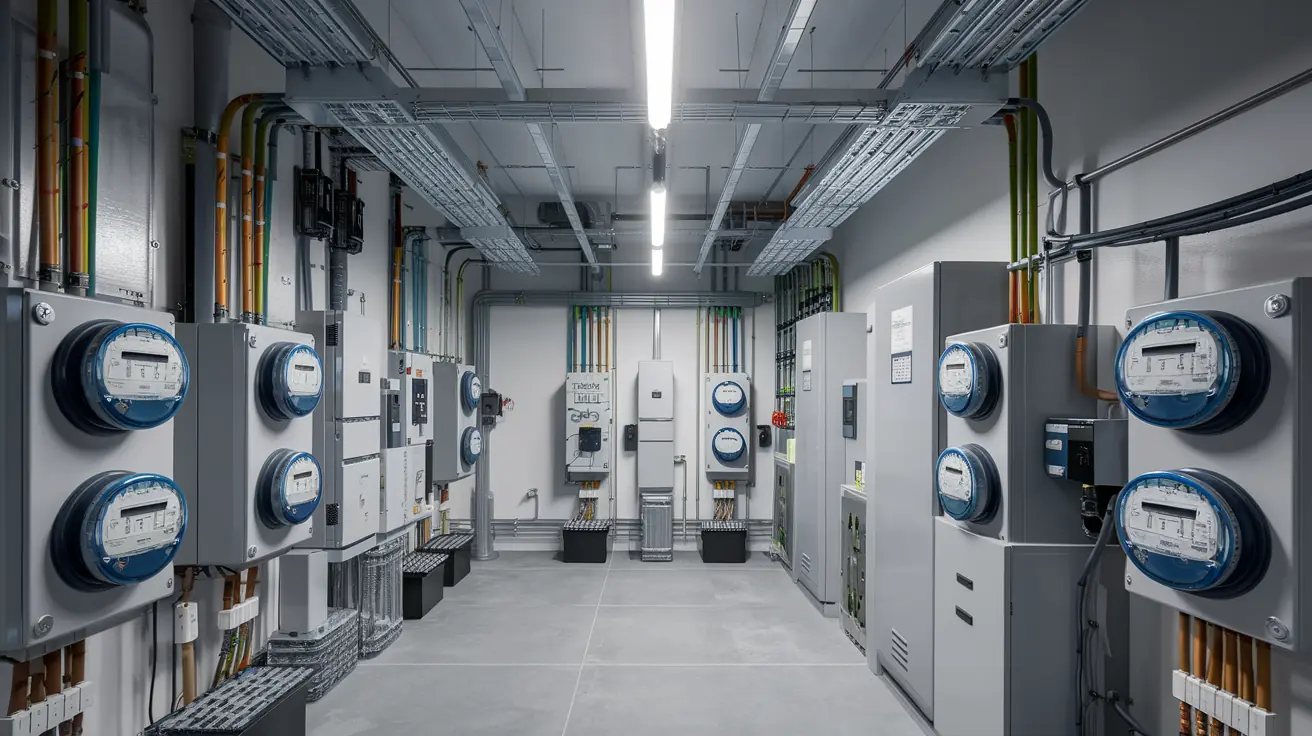
Reading the meter: Modern digital meters display power factor in real-time. If your facility has a meter with a display, cycle through the readings to find PF or cosφ.
Power quality analyzers: For detailed analysis, portable power quality meters measure power factor along with harmonics and other electrical characteristics. Electrical contractors or energy auditors use these for comprehensive assessments.
What to track: Power factor varies throughout the day and month. Track your lowest reading—that's what triggers penalties. Monthly averages can mask problem periods.
Power Factor Correction Equipment
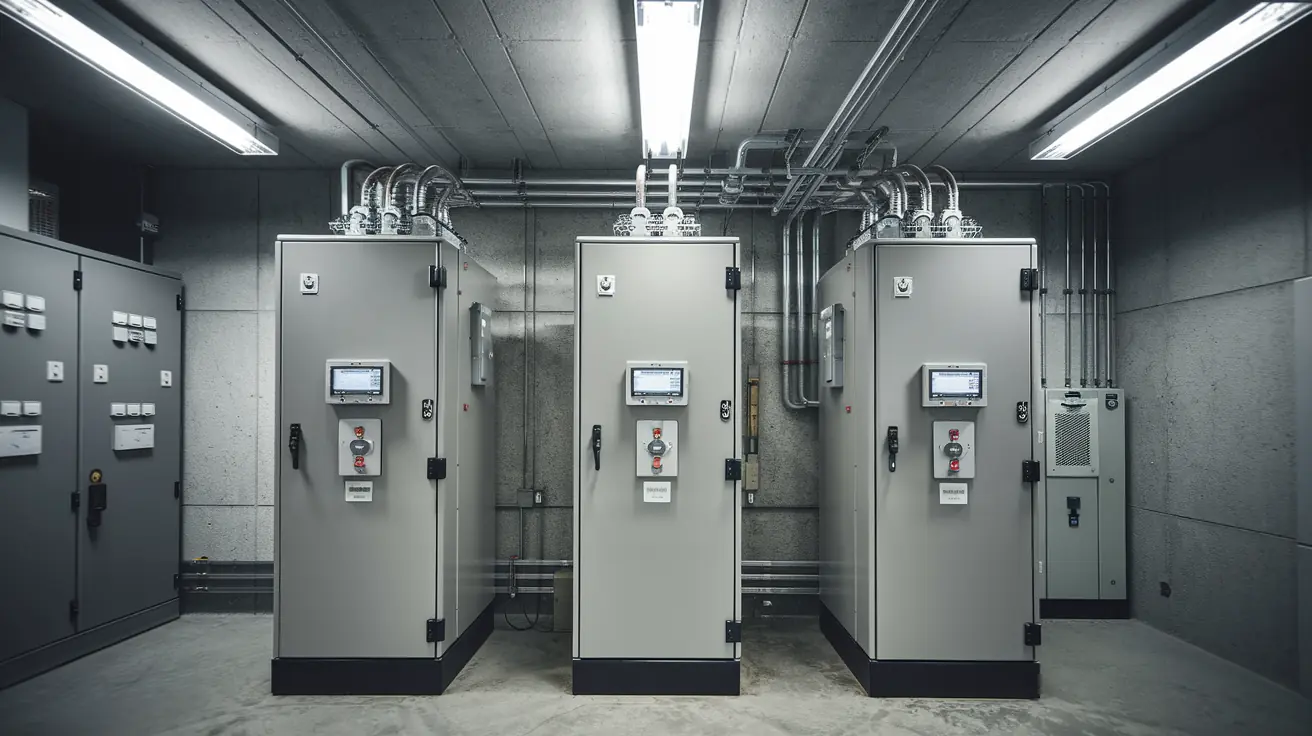
Capacitor banks are the standard solution for power factor correction. Capacitors supply reactive power locally, reducing what the utility must deliver.
Fixed capacitors: Installed permanently, these provide constant correction. Best for facilities with steady, predictable loads. Cost: $50-100 per kVAR installed.
Automatic switching capacitors: Multiple capacitor stages switch on/off based on real-time power factor measurement. Better for facilities with variable loads. Cost: $100-150 per kVAR installed.
Sizing considerations: Oversized capacitor banks can push power factor above 1.0 (leading power factor), which also triggers utility penalties and can damage equipment. Proper engineering analysis is essential.
Harmonic considerations: Facilities with VFDs, LED lighting, or other harmonic-generating loads may need harmonic filters in addition to or instead of simple capacitors. Capacitors can amplify harmonics if not properly designed.
Calculating Power Factor Correction ROI
Power factor correction typically pays back within 12-24 months. Here's how to calculate your potential savings.
Step 1: Find your current penalty
Review utility bills to identify power factor penalty charges. Look for line items mentioning "power factor adjustment," "reactive demand," or "kVAR charges."
Step 2: Calculate kVAR needed
To raise power factor from current PF to target PF:
kVAR needed = kW × (tan(arccos(current PF)) - tan(arccos(target PF)))
Example: 200 kW load at 0.75 PF targeting 0.95 PF needs about 125 kVAR of correction.
Step 3: Estimate costs
At $75-125/kVAR installed, that 125 kVAR system costs $9,375-15,625.
Step 4: Calculate payback
If penalties currently run $800/month, payback = $12,500 ÷ $9,600/year = 15.6 months.
Most businesses see 12-24 month payback, with savings continuing for the 15-20 year equipment life.
Other Ways to Improve Power Factor
Beyond capacitor banks, operational changes can improve power factor at no cost.
Right-size motors: Oversized motors running at partial load have terrible power factor. A 50 HP motor handling a 20 HP load might run at 0.60 PF. Replacing with a properly sized motor improves efficiency and power factor simultaneously.
Avoid lightly loaded equipment: Turn off motors and transformers when not in use. Even idling motors draw reactive power.
Upgrade lighting: Replace magnetic ballast fluorescents with LED lighting. Beyond energy savings, LEDs have near-unity power factor versus 0.50 for magnetic ballasts.
VFD selection: When specifying new variable frequency drives, choose models with active front ends or input filters that maintain good power factor. The incremental cost is often less than installing separate correction.
Load scheduling: Running high-power-factor loads simultaneously with low-power-factor loads improves overall facility power factor.
Frequently Asked Questions
What is a good power factor for a business?
How much do power factor penalties cost?
Can power factor be too high?
Looking for more? Explore all our Business Energy guides for more helpful resources.
About the author

Consumer Advocate
Han helps consumers in deregulated states understand their electricity options. He breaks down confusing rate structures, explains how to read an EFL, and identifies which plans save money versus those that just look cheap upfront.
Compare rates in your area
Topics covered
Last updated: January 15, 2026