Quick Answer
Get your 12-month kWh history from SmartMeterTexas.com, then compare rates at your actual usage tier (500, 1000, or 2000 kWh). Power to Choose shows rates at 1000 kWh, but your real costs depend on your usage. ElectricRates.org calculates total costs including TDU delivery charges.
Why Your Usage Level Changes Everything
Texas electricity plans are designed to look cheapest at 1,000 kWh—the standard comparison point on Power to Choose.
But reality doesn't match:
| What Plans Assume | What Texas Households Use |
|---|---|
| 1,000 kWh/month | 1,100-1,200 kWh average |
| Steady usage | 1,500-2,500 kWh in summer |
The plan ranked cheapest at 1,000 kWh might cost significantly more at 2,000 kWh due to:
- Tiered pricing
- Disappearing credits
- High per-kWh rates above thresholds
A household using 800 kWh needs different plan features than one using 2,500 kWh.
Shopping without usage data means trusting marketing over math.
How to Gather Your Usage Data
Start with your last 12 months of electricity bills to capture seasonal variation.
Note:
- Monthly kWh usage for each month
- Your highest usage month
- Your lowest usage month
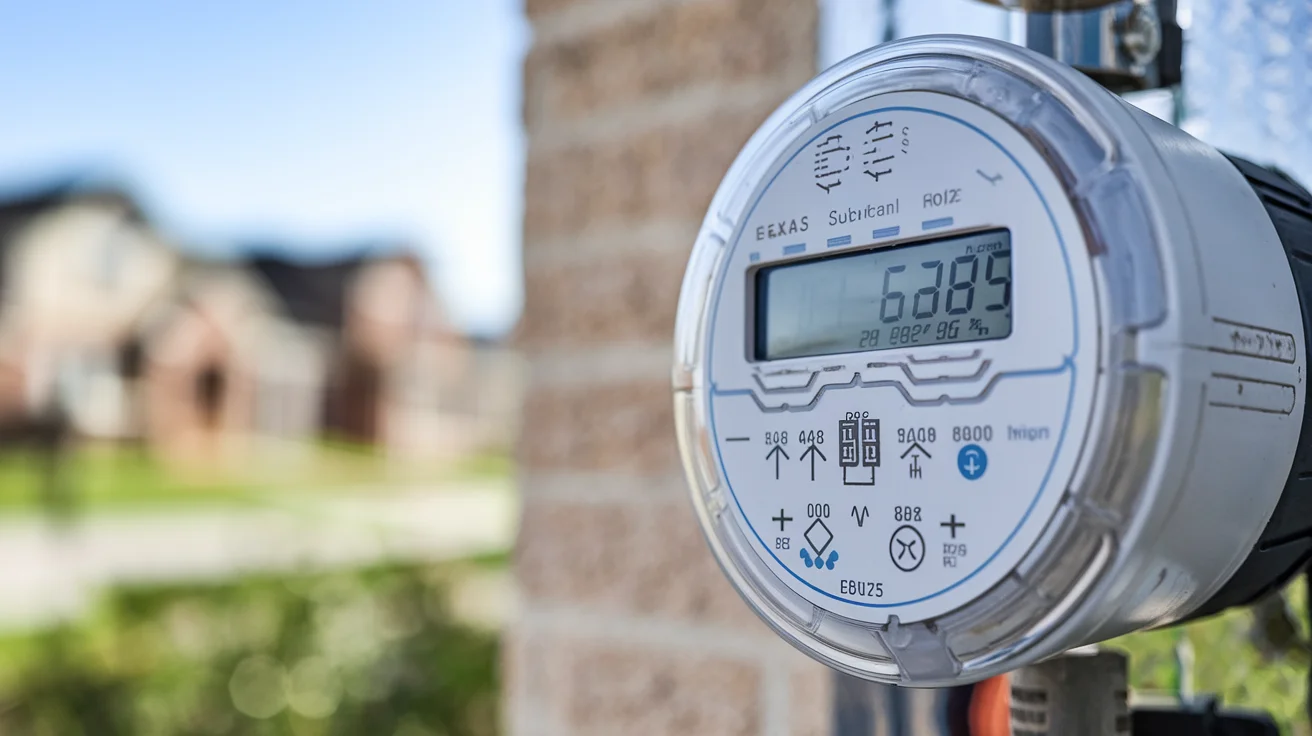
For detailed data: Register at SmartMeterTexas.com for 15-minute interval readings.
If you've lived in your home less than a year, estimate using square footage:
| Home Size | Annual Usage | Monthly Average |
|---|---|---|
| 1,500 sq ft | ~10,000 kWh | ~850 kWh |
| 2,000 sq ft | ~13,000 kWh | ~1,100 kWh |
| 2,500 sq ft | ~16,000 kWh | ~1,350 kWh |
Summer months may double these averages. New construction uses less due to modern efficiency standards.
Understanding Usage Categories
Texas electricity shoppers fall into usage categories that determine optimal plan structure:
Low Usage (under 800 kWh monthly)
- Apartments, condos, efficient homes
- Benefit from plans without high base charges
- Can't spread fixed costs over many kWh
Average Usage (800-1,500 kWh)
- Most flexibility in plan options
- Often find great deals near 1,000 kWh sweet spot
- Largest selection of competitive plans
High Usage (over 1,500 kWh)
- Large homes, heavy AC users
- Scrutinize pricing at 2,000 kWh and above
- Many plans become less competitive at high usage
Variable Usage (large seasonal swings)
- Prioritize consistent pricing across all levels
- Avoid plans optimized for specific thresholds
Calculating Your Actual Cost Per kWh
Step 1: Download the EFL for each plan
Step 2: Find the average price at YOUR usage level (500, 1,000, or 2,000 kWh)
Step 3: For usage between these points, calculate manually:
- Multiply usage × average price
- Add any base charges
Step 4: Compare total monthly costs, not per-kWh rates
Why base charges matter:
| Base Charge | At 2,000 kWh | At 500 kWh |
|---|---|---|
| $10/month | +$0.005/kWh | +$0.02/kWh |
The same base charge has 4x the impact on low-usage households.
Evaluating Time-of-Use Plans
Free nights and weekends plans can dramatically reduce bills—or increase them—depending on when you use electricity.
Use Smart Meter Texas hourly data to calculate:
What percentage of your usage falls in off-peak hours?
| Off-Peak Hours | Plan Type |
|---|---|
| 8pm-6am | Free Nights |
| Sat-Sun all day | Free Weekends |
Decision framework:
| Off-Peak Usage % | Recommendation |
|---|---|
| 50%+ | Free nights/weekends likely wins |
| 40-50% | May break even—calculate carefully |
| Below 40% | Fixed-rate plan probably cheaper |
Be honest: Running the dishwasher at 9pm is manageable. Skipping AC during a 100-degree afternoon is not.
Accounting for Seasonal Variation
Texas usage swings dramatically between seasons:
| Month | Typical Usage |
|---|---|
| March | 900 kWh |
| August | 2,500 kWh |
Plans with usage credits (like 1,000 kWh thresholds) penalize months where you fall short or exceed the target.
Simple fixed-rate plans without usage tricks provide consistent value across all usage levels.
If your summer usage regularly exceeds 2,000 kWh:
- Verify plan pricing at that level
- Some plans increase rates sharply above 2,000 kWh
Pro tip: Sign contracts in spring when rates typically dip and moderate usage won't trigger unfavorable terms.
Real-World Plan Comparison Example
Scenario: Household averaging 1,400 kWh monthly, with 2,300 kWh in August
| Plan | Rate at 1,000 kWh | Rate at 2,000 kWh | Type |
|---|---|---|---|
| Plan A | 11.5¢ | 13.8¢ | Tiered |
| Plan B | 12.1¢ | 12.1¢ | Flat |
At 1,000 kWh: Plan A wins ($115 vs $121)
At 1,400 kWh average: Nearly tied ($170 vs $169)
In August at 2,300 kWh: Plan B saves $39 ($278 vs $317)
Annual result: Plan B saves money despite appearing more expensive on Power to Choose.
This demonstrates why usage-specific comparison matters more than advertised rates.
Monitoring Usage Throughout Your Contract
Once enrolled, continue monitoring your usage through Smart Meter Texas.
Track monthly:
- Actual costs vs. projections
- Any unexpected increases
- Changes in usage patterns
Reassess your plan if:
- You have a new baby
- You start working from home
- You add an electric vehicle
- Your usage pattern changes significantly
Switching options:
- Most contracts allow switching with advance notice
- Early termination fees may apply (typically $150-200)
- Some households switch annually to optimize
- Others prefer simplicity of long-term fixed rates
Either approach works better when informed by actual usage data rather than guesswork.
Skip the Math: See Your Personalized Rates
All the calculations above? We've automated them.
Our Texas comparison tool connects directly to Smart Meter Texas, pulls your actual usage history, and calculates your exact cost for every plan.
Same plans. Personalized prices.
How it works:
1. Enter your ZIP code and click "See Your Personalized Rates"
2. We connect to your smart meter to pull your real usage—not estimates
3. Every plan is re-priced based on YOUR actual consumption pattern
4. See exactly what you'd pay, ranked from cheapest to most expensive
No more manual calculations at 500, 1,000, and 2,000 kWh. No more guessing which benchmark matters for you. See your personalized rates →
Frequently Asked Questions
How do I find my average monthly kWh usage?
Should I shop based on my summer or winter usage?
Why does the same plan cost different amounts at different usage levels?
What is a good average rate for Texas electricity?
How accurate are online electricity calculators?
Looking for more? Explore all our Texas Energy guides for more helpful resources.
About the author

Consumer Advocate
Enri knows the regulations, the fine print, and the tricks some suppliers use. He's spent years learning how to spot hidden fees, misleading teaser rates, and contracts that sound good but cost more. His goal: help people avoid the traps and find plans that save money.
Compare rates in your area
Topics covered
Sources & References
- U.S. Energy Information Administration (U.S. Energy Information Administration): "Texas households average higher electricity usage than national average"Accessed Dec 2025
- Smart Meter Texas (Smart Meter Texas): "Smart Meter Texas provides detailed interval usage data"Accessed Dec 2025
Last updated: December 31, 2025