Quick Answer
Texas law (PUCT Rule 25.24) requires deposit waivers for seniors 65+, customers with good payment history, and family violence victims. Plus prepaid options for those who can't qualify. Learn the legal ways to avoid deposits.
Getting Electricity Without a Deposit in Texas
Traditional electricity providers often require deposits of $150-$400 if you have poor credit or no credit history. But you have options in Texas.
Two paths to no-deposit electricity:
| Path | How It Works | Best For |
|---|---|---|
| Prepaid Electricity | Pay in advance, no credit check | Can't pass credit checks |
| Traditional with Workarounds | Letter of credit or autopay | Want lower fixed rates |
Prepaid Electricity:
- Pay for power in advance
- No deposit required, no credit check
- Balance alerts as you use power
- Service disconnects if balance hits zero
- Most flexible option for those who can't pass credit checks
Traditional Plans with Credit Workarounds:
- Some providers waive deposits with letter of credit from previous utility
- Automatic payment enrollment can eliminate deposits
- Requires documentation but gives access to competitive fixed rates
Bottom line: Prepaid is faster and easier. Traditional plans with workarounds are cheaper long-term if you qualify.
How Prepaid Electricity Works in Texas
Prepaid electricity flips the traditional model. Pay first, use power, refill when low.
Getting Started:
- Sign up online or by phone—typically 10-15 minutes
- Make an initial payment ($25-$75 depending on provider)
- Service activates within 1-3 business days (same-day available from some providers)
- No credit check, no SSN required with some providers, no deposit
Ongoing Usage:
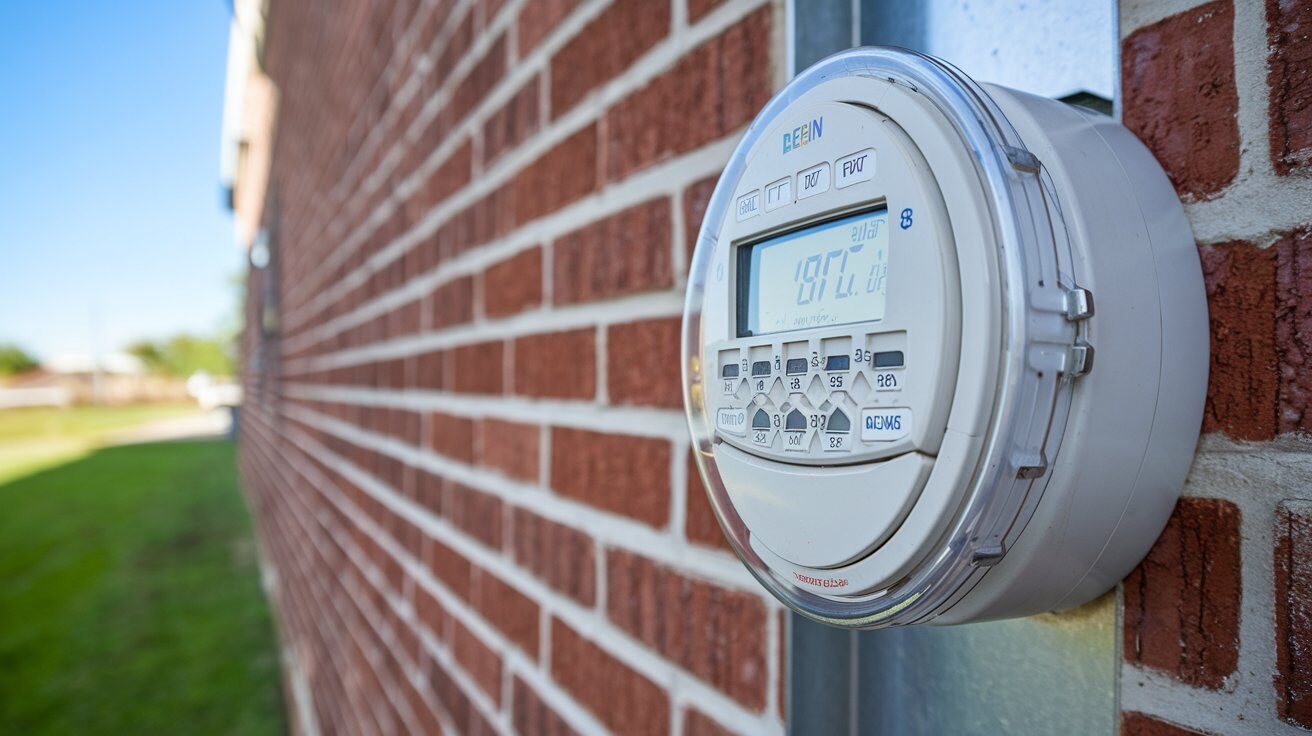
- Smart meter tracks real-time usage
- Balance decreases as you use power
- Receive alerts at low balance thresholds ($10, $5, $0)
- Add funds anytime via app, website, phone, or retail locations
- Service disconnects when balance hits $0 (no notice required in Texas for prepaid)
The Tradeoff:
| Plan Type | Rate Range | What You Pay For |
|---|---|---|
| Prepaid | 15-20¢/kWh | Convenience, no credit check |
| Traditional Fixed | 10-14¢/kWh | Lowest rates, requires credit |
You're paying for convenience and accessibility, not the lowest possible rate.
Top No-Deposit Prepaid Providers in Texas
Several prepaid providers operate in Texas. Here are the major players:
| Provider | Rate Range | Key Features |
|---|---|---|
| [Payless Power | 15-18¢/kWh | Same-day service, retail refill locations |
| Pogo Energy | 14-17¢/kWh | No fees, good mobile app |
| Now Power | 16-19¢/kWh | No ID required, quick connect |
| Acacia Energy | 15-18¢/kWh | Underserved markets focus |
| Snap Energy Latino | 15-17¢/kWh | Bilingual, no SSN required |
Payless Power: The largest prepaid provider in Texas. Same-day service available. Multiple refill options including retail locations. Daily usage alerts. No ID required for some plans.
Pogo Energy: No contract, no late fees, no disconnect fees. Daily balance updates. Lower rates than some prepaid competitors. Good mobile app.
Now Power: No ID required for enrollment. Simple pricing. Available in most Texas markets. Quick connection times.
Acacia Energy: Focused on underserved markets. Available in Oncor, CenterPoint, and AEP territories.
Snap Energy Latino: Bilingual support. No SSN required. Strong presence in Hispanic communities.
Rates change frequently. Check current pricing before enrolling.
Legal Ways to Waive Deposits (PUCT Rule 25.24)
Texas has specific regulations about electricity deposits. Under PUCT Rule 25.24, providers must waive deposits in certain situations:
Three legal ways to waive deposit requirements:
| Qualification | What You Need | Notes |
|---|---|---|
| Age 65+ | Valid ID (driver's license or passport) | Must not have outstanding balance with previous provider |
| Good Payment History | Letter of credit from previous provider | 12 months of on-time payments, no late payments more than once |
| Family Violence Victim | Certification letter | From Texas Council on Family Violence, medical personnel, or law enforcement |
Age 65+: Just show your ID proving you're 65 or older, and confirm no outstanding balance with a previous provider. Some providers like Champion Energy offer "Champ Silver" plans specifically for seniors 60+.
Good Payment History: Call or email your previous electricity provider and request a "letter of credit." This letter confirms you were a customer for at least 12 months, weren't delinquent, weren't late more than once in the last year, and weren't disconnected for nonpayment. Most REPs accept this in place of a deposit.
Family Violence Victim: If you're fleeing domestic violence, you can get a deposit waiver with certification from the Texas Council on Family Violence, treating medical personnel, law enforcement, or the District/County Attorney's office. PUCT Deposit Waiver Form
Other Workarounds:
- Autopay enrollment waives deposits with some providers
- LIHEAP, CEAP, or SNAP recipients may qualify for deposit exemptions
- Shop around—credit requirements vary by provider
The Prepaid-to-Fixed Rate Strategy
Here's a strategy for credit-challenged customers who want to eventually get lower fixed rates:
The 12-Month Path:
1. Sign up for prepaid electricity (no credit check required)
2. Pay on time for 12 consecutive months
3. Request a letter of credit from your prepaid provider
4. Use that letter to sign up for a traditional fixed-rate plan with deposit waived
Why this works: The letter of credit proves you're a reliable customer. Most traditional providers accept this as proof of creditworthiness, even if your actual credit score is poor.
The math:
- Year 1 on prepaid: ~$2,040 at 17¢/kWh (1,000 kWh/month)
- Year 2+ on fixed: ~$1,320 at 11¢/kWh
- Annual savings after switching: $720/year
This approach treats prepaid as a stepping stone, not a permanent solution. It's worth the first-year premium to build the payment history that unlocks better rates.
Prepaid vs. Traditional: Which Costs Less?
Let's run the numbers on a typical Texas household using 1,000 kWh monthly:
Cost comparison (1,000 kWh/month):
| Plan Type | Rate | Monthly | Annual | Deposit |
|---|---|---|---|---|
| Prepaid | 17¢/kWh | $170 | $2,040 | $0 |
| Traditional Fixed | 11¢/kWh | $110 | $1,320 | $200 |
Year 1 totals:
- Prepaid: $2,040
- Traditional (with deposit): $1,520 ($1,320 + $200 deposit)
- Savings with traditional: $520 in year one
Year 2+ savings: $720 annually (no deposit to pay again)
The Reality Check:
If you can't qualify for traditional service at all, prepaid is your only option. But if you can get traditional service with a deposit, the deposit usually pays for itself within 4-6 months through lower rates. Consider the deposit an investment in lower long-term costs.
Getting Connected as Fast as Possible
Need power today? Here's how to speed up connection:
Same-Day Service Providers:
- Payless Power advertises same-day connections in many areas
- Most prepaid providers connect faster than traditional REPs
- Call early in the day for best same-day odds
Priority Connection Fees: Some providers offer priority service for $30-50 extra. Worth it if you're already without power.
Requirements for Fast Connection:
- Valid service address with working smart meter
- No switch hold on the meter (previous tenant issues)
- Payment method ready (card or bank account)
- ESI ID helps but isn't always required
What Slows Things Down:
| Delay | Impact | Solution |
|---|---|---|
| Switch holds | Days to clear | Contact TDU directly |
| Meter work needed | Physical visit required | Plan ahead |
| Late-day orders | Processed next business day | Order before noon |
| Holidays/weekends | Office closures | Weekday mornings best |
Bottom line: If speed matters most, call Payless Power or another prepaid provider before noon on a weekday.
Tips for Managing Prepaid Electricity
Prepaid electricity requires more attention than traditional plans. Here's how to avoid disconnection surprises:
| Tip | What to Do | Why It Matters |
|---|---|---|
| Set Balance Alerts | Alerts at $20, $10, $5 | Time to add funds |
| Enable Auto-Reload | Automatic refills below threshold | Prevents surprise disconnection |
| Track Usage | Know your daily rate ($5/day = $50 lasts 10 days) | Budget accurately |
| Budget Seasonally | Extra funds for summer AC | Usage can triple |
| Know the Rules | $0 = immediate disconnect in Texas | No grace period |
Plan Exit: Switch when credit improves to save with traditional rates.
Set Up Balance Alerts: Most providers let you customize low-balance notifications. Set alerts at $20, $10, and $5 so you have time to add funds.
Track Usage Patterns: Learn your daily usage rate. If you use $5/day in summer, you know a $50 reload lasts about 10 days.
Know Disconnection Rules: In Texas, prepaid providers can disconnect without notice when balance hits $0. There's no grace period like traditional service. Stay ahead of your balance.
Plan Your Exit Strategy: If your credit improves, switch to traditional service for lower rates. Most prepaid plans have no contract, so you can leave anytime.
Frequently Asked Questions
Can I get electricity in Texas with no credit check?
How much does prepaid electricity cost in Texas?
What happens if my prepaid electricity balance runs out?
Which no-deposit electricity company connects fastest?
Can I switch from prepaid to regular electricity?
Looking for more? Explore all our Texas Energy guides for more helpful resources.
About the author

Consumer Advocate
Enri knows the regulations, the fine print, and the tricks some suppliers use. He's spent years learning how to spot hidden fees, misleading teaser rates, and contracts that sound good but cost more. His goal: help people avoid the traps and find plans that save money.
Compare rates in your area
Topics covered
Sources & References
- PUC of Texas - Prepaid Service (Public Utility Commission of Texas): "Texas allows prepaid electricity disconnection without advance notice when balance reaches zero"Accessed Dec 2025
- Texas Administrative Code Title 16, Part 2 (Texas Secretary of State): "Texas prohibits deposits for customers receiving certain assistance programs"Accessed Dec 2025
Last updated: January 26, 2026